Two Kinds of Chee The Oily Chinese Food Debate: Healthy or Not? Asian Food Markets Rice or Bread? Warm Water
Two Kinds of Chee “Chee” is one of those concepts that floats around in the English-speaking world, but is rarely understood outside of its cultural context. I’ve written about this before in Ginseng and Ginger posts. There are loads of potential benefits to your health if you consider Qi in your daily life. But, first we need to [...]
The Oily Chinese Food Debate: Healthy or Not? As the world turns its eyes on China, and all parts of developing Asia, increasing numbers of Westerners are traveling here and getting a taste of it for themselves, literally. As tasty as the dishes may be, foreign guests have started deciding for themselves that Chinese food might just be “a little too oily to [...]
Asian Food Markets Most cities with at least 50,000 people in America are bound to have some kind of Asian market. It might be Chinese, Japanese, Korean, Thai, Vietnamese, or any other Asian nationality. That shouldn’t be a problem because all Asian food is awesome! The map to the right will help you find your closest Asian food market. [...]
Rice or Bread? Ah, another timeless rivalry! Why are Asian people so thin when they eat bad-for-you White Rice all the time?? Isn't Brown Rice better?? Well, I must say that I hate the flavor of brown rice. It tastes like "diet" cream cheese or "low fat" milk. It seems the flavor is missing…don't you think? White rice is [...]
Warm Water When it's meal time, never ask this question: "OK, everyone, do you want to drink Fresca or Diet Coke?" You should be putting sugar in delicious Asian meals instead. Not only are the above two choices full of useless sugar, they are often served cold. Your body doesn't deserve to be treated this way, so you [...]

Summer Cooking 2010: The Best Cauliflower Dish in the World?

Cauliflower

Cauliflower

Day two of my visit home and I decided to cook up something unexpected!  Big, white, fluffy cauliflower! Woo hoo! First of all, my father looked at the huge serving of cauliflower I had prepared and was anything but ecstatic. …great… Ben’s cooking dull, taste-less, rabbit food… I knew this meal could be a tough pill to swallow, so I had to take out the big guns!

To clarify, my father is a meat-lover. Most dads are. Steak, hamburger, chicken, or pork should fill the air at most meal times.  A major dish at lunch consisting of rabbit food was a little disappointing to say the least. So, I thought… if I could transform the flavor of this vege into something mouth-watering and meaty, what would it taste like?

Let’s Tarantino this recipe so that the food-drama doesn’t go to waste… Read More…


Summer Cooking 2010: Ribs, Toufu, and Greens

ribs-toufu-greens

Ribs, Toufu, and Greens

It’s nice to be home! And I’ve been cooking various dishes to show my family that it is easy to cook healthy Asian food, one of the purposes of creating AsianLiving.me!

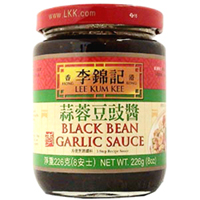
The first lunch I made included my now infamous Pork Ribs with Garlic and Black Bean Sauce, with spicy Toufu, and Spinach Greens. It was the first time my family had tried these dishes made at home, rather than at a restaurant.

The spicy Toufu was a little new for me. (It’s hard to do Toufu right!) So, let me summarize this basic recipe here: Read More…


Medicinal Use of Tea

A popular request I get is related to the medicinal use of tea. I’m finally writing this article after discussing this topic with various Chinese friends who have nearly 20 years of experience in the tea business. After discussions with them and other trusted tea connoisseurs I’m ready to post on this topic. I suggest reading a previous post about understanding the world of tea in order to get more familiar with the major varieties of tea.

You’ll find that two major substances in tea do most of the leg work: epigallocatechin gallate (EGCG) and polyphenol. Remember: I’m not a doctor and the following is a collection of information told by friends, which I’ve cross-referenced with scientific studies. Read More…


Understanding The World of Tea

Is Oolong tea a kind of green tea? Is Long Jing a kind of tea or a brand?  Which one does what for you? These questions have been on my brain longer than my stay here in China (since 2005). After all, tea is the most consumed drink in the world after water. There are certainly more than a few reasons for that! After discussing the specifics with Chinese friends, tea aficionados, and tea shop owners, I can safely say that the mystery around tea is not so complicated after all. Let’s start general and get more specific as we go along!

One Plant: All (leaf) tea comes from the same species of plant. Just like apples all come from apple trees (haha). Varieties exist among all species and those varieties include:  Green, Oolong, Black, White, Yellow,and Pu’er. Processing and growing techniques are other ways that teas get their distinctive colors, flavors, and characteristics. For specifics on processing, check out the image on the right. The following disambiguations are listed from lighter to darker tea varieties.

Read More…


Stir-Fried Udon Noodles

Pronounced “Wu Dong Mian” in Chinese, this stir-fried version of U-Don Noodle soup is awesome. The vegetables can be substituted by any other vege that’s in the house. The dish is about 40% noodles, 15% meat, and 45% vegetables. I don’t really use measurements in cooking, so please don’t worry about being specific.

Stir Fry U-Don Preparation

Stir-Fried Udon Ingredients

Here is a picture of all the ingredients basically prepared. You’ll need to do some shopping at the asian market for 1 or 2 things. (All of the Cooking recipes on Asian Living require a trip to the Asian Market.)

* Sesame Oil, Soy Sauce, Shitake Mushrooms (See the bag  of dried 香菇, let them sit in water first), Chicken Broth (granulated is fine), a pinch of sugar, and bag of prepared Udon noodles (乌冬面, usually its a Japanese food); VEGES: Broccoli (cut up), Scallions (cut in 1 inch segments, not too short), garlic (1 or 2 cloves), green pepper (sliced), and an egg (for good measure). MEAT: Choose any meat you want, but don’t cut up a huge steak or anything… I sliced up some pork, as you can see.

1~ Boil U-Don noodles for a few minutes and set them aside.

2~ Put Sesame oil, or vegetable/peanut oil, in a wok. Heat it up and start cooking the meat, garlic, and scallions. (I like going rogue.) Read More…


40 is Good… and 60 is better

60 Years Young

Of all the concepts that differ between Western and Eastern culture, I’ve found that age represents one of the deepest divides. When China celebrated its 60th year of founding their nation in 2009, I quickly discovered that it was more than just a multiple-of-10 anniversary; China had become a fully matured adult. The phrase for turning sixty is “年过花甲”, which is a cycle of 60 years; or literally becoming a flower. 花 is flower in Chinese, but in this case it represents the white hair of a 60 year-old.

There is a respect for elders here (in China and greater Asia) which I’ve never experienced before my arrival in 2004. Back home turning 40 means going “over the hill” which is a concept that doesn’t exist here. The jokes about “getting old” are supposed to be playful, but actually linger in our subconscious… Wouldn’t it be nice if getting older was a sign of wisdom and experience, rather than a reason to be pitied?

Times are changing. Its true that Asian people don’t enjoy getting old either. They also wish to stay young forever… and they certainly try! After about 20 years of life it seems both Western and Eastern cultures start getting nervous about age. Perhaps they should get married soon… have a child before 30… own a house by some other pre-set age…  Parents out here are mostly at fault for causing the age-anxiety in their children. As for me, I’m just lucky to have very supportive parents who don’t set arbitrary expectations on their children. I’m taking my time and enjoying the ride. So, thanks for the freedom mom and dad; you won’t regret it!


Asian Secret #2: Geo Arbitrage

If you are American, have you ever bought medicine in Canada because it was cheaper than back home? During the housing crash, which kicked off the great recession of 2008-2009, did you buy property at bargain basement prices? The goal in these scenarios is to take advantage of disparities between markets (in different geographical locations), which is the meaning of arbitrage. This strategy is used in financial markets everyday and can be expanded into more aspects of our lives.

Companies have been taking advantage of lower labor costs in developing countries for many years and it is becoming more common for individuals to do it too. Health and Medical Tourism is a booming industry, growing particularly fast in India. According to a report from McKinsey and Co, medical tourism in India will grow to USD 2 billion by 2012. [*] And in 2007, over 750,000 Americans spent $2.1 billion on cheaper medical treatments overseas. Medical travel is estimated to be growing at an annual rate of 20%-25%. By 2017, close to 23 million Americans will travel overseas for medical treatment. [*]

Although medical tourism is becoming more and more common, its not the only way to take advantage of price differentials around the world. Increasingly, you can improve your life by getting other people to do tasks that are not worth your time. Some great reading on how to do this can be found in Tim FerrisFour Hour Work Week and A.J. Jacob’s My Life as an Experiment, in which the authors organize clever ways to outsource as many parts of their lives as possible, including “…e-mails, phone calls, shopping, arguments with [his] wife and reading bedtime stories to [his]son.

How do you shovel tasks off your plate in order to free up time?

Please let us know in a comment below.